EDIFICIO ALAMEDA
This visualization project was developed with a clear objective: to support the commercial promotion of a residential building aimed at investors and future buyers. From the beginning, we understood that the images needed to function as a key sales tool, capable of communicating not only the architectural design, but the experience of living in the project.
As a local development located near the Paraná River, the challenge was particularly demanding. We focused on accurately recreating recognizable urban references and atmospheric conditions, producing images that feel familiar, believable, and easy for the target audience to relate to. Each scene was designed to feel close, realistic, and part of everyday life.
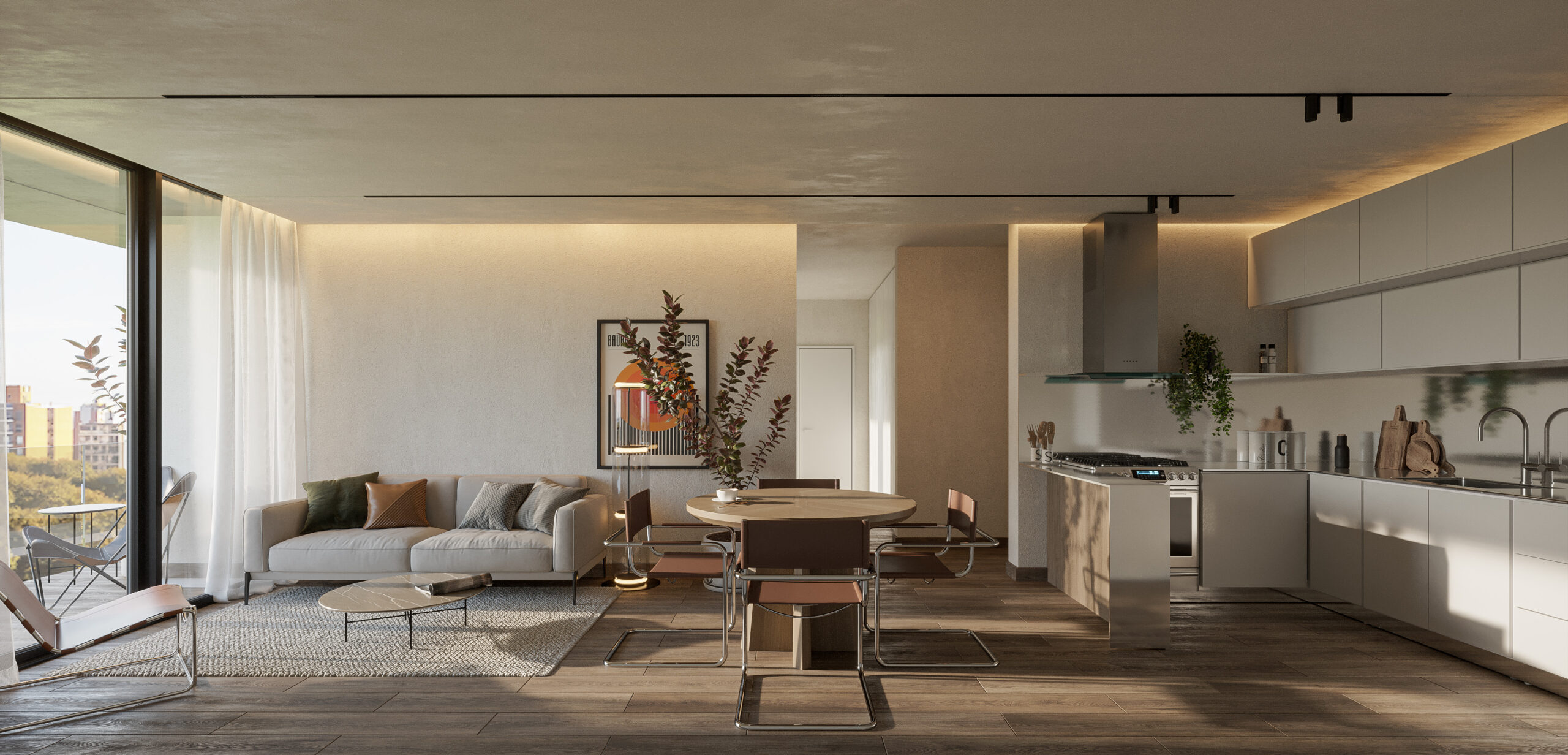
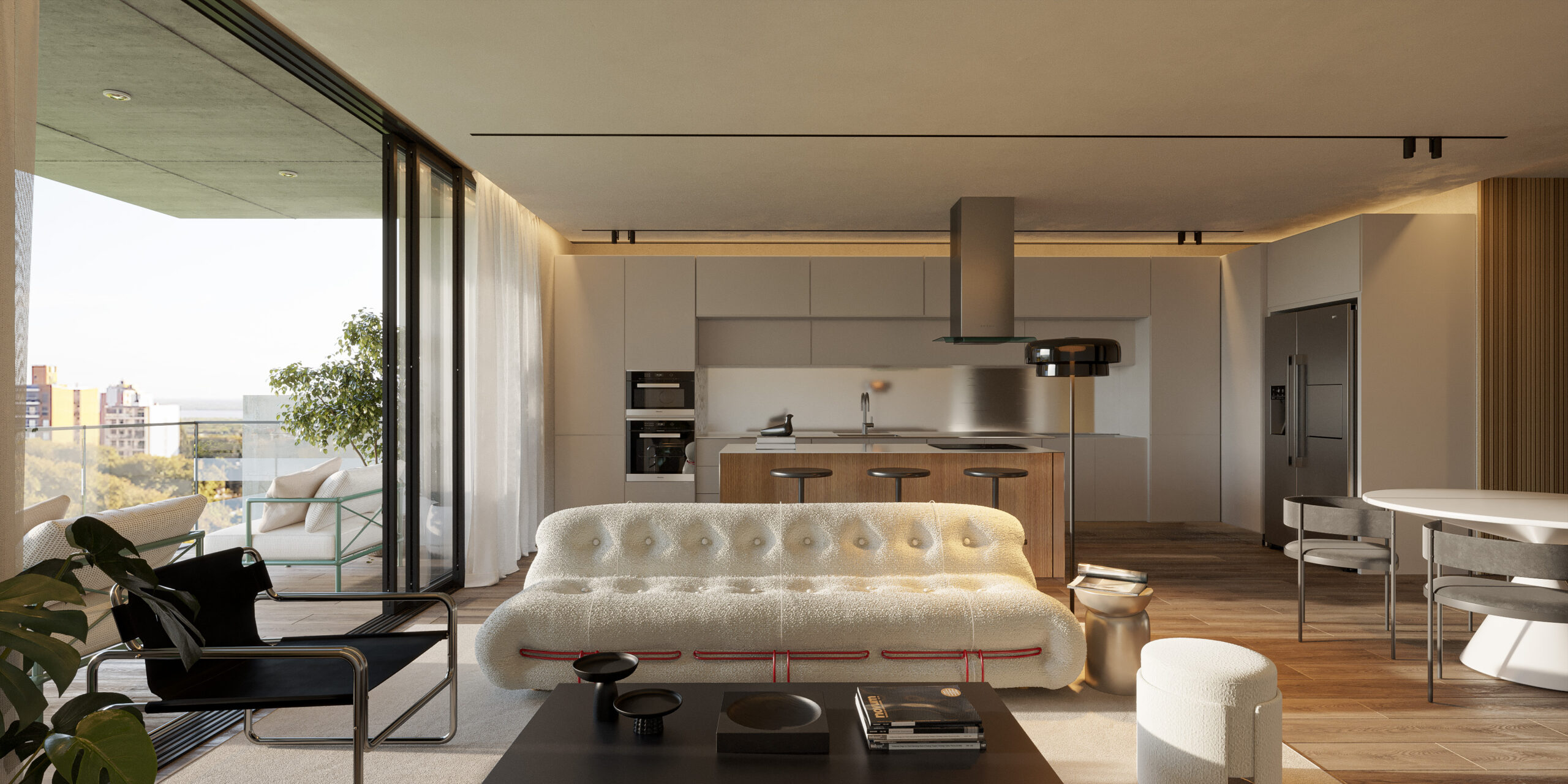
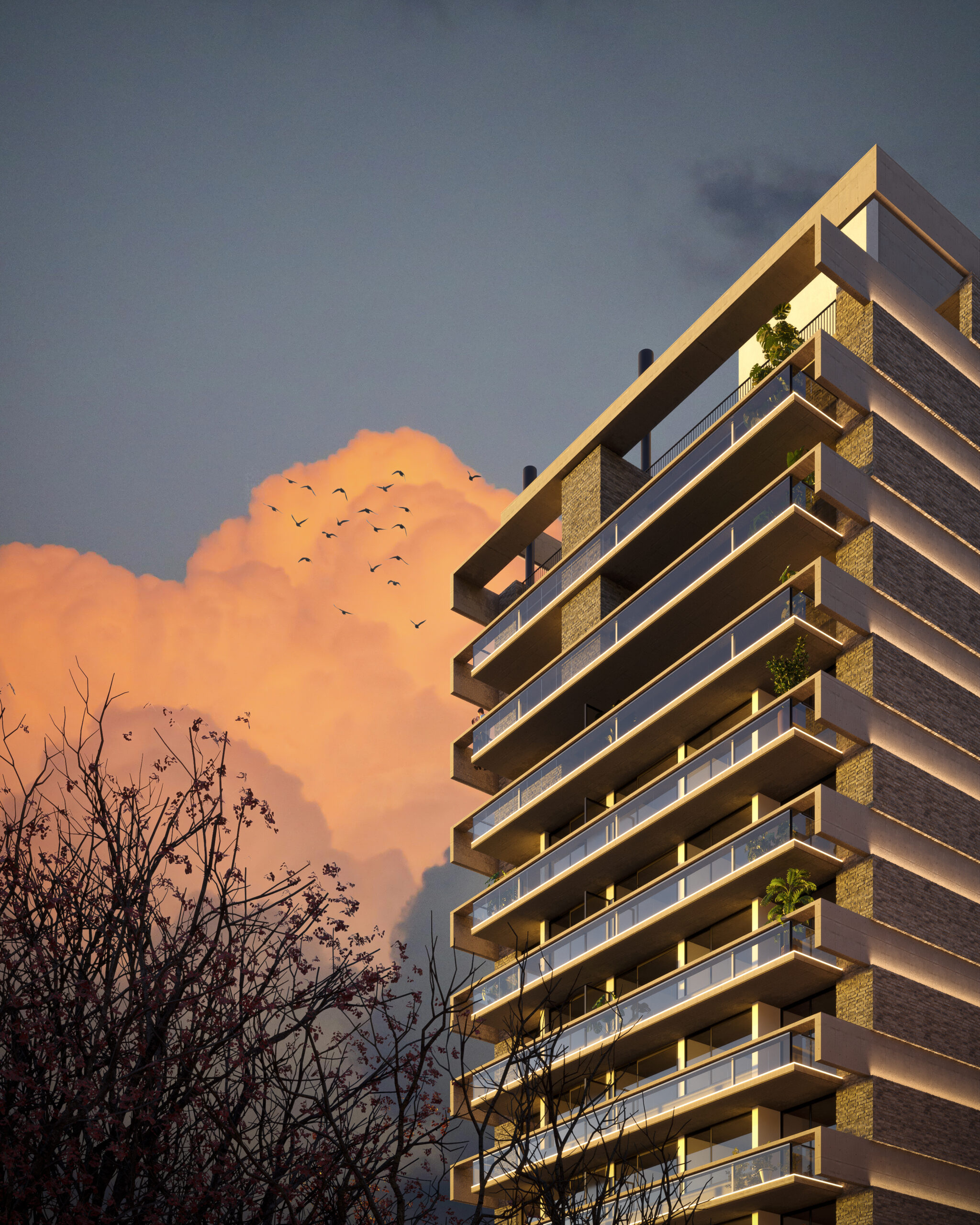
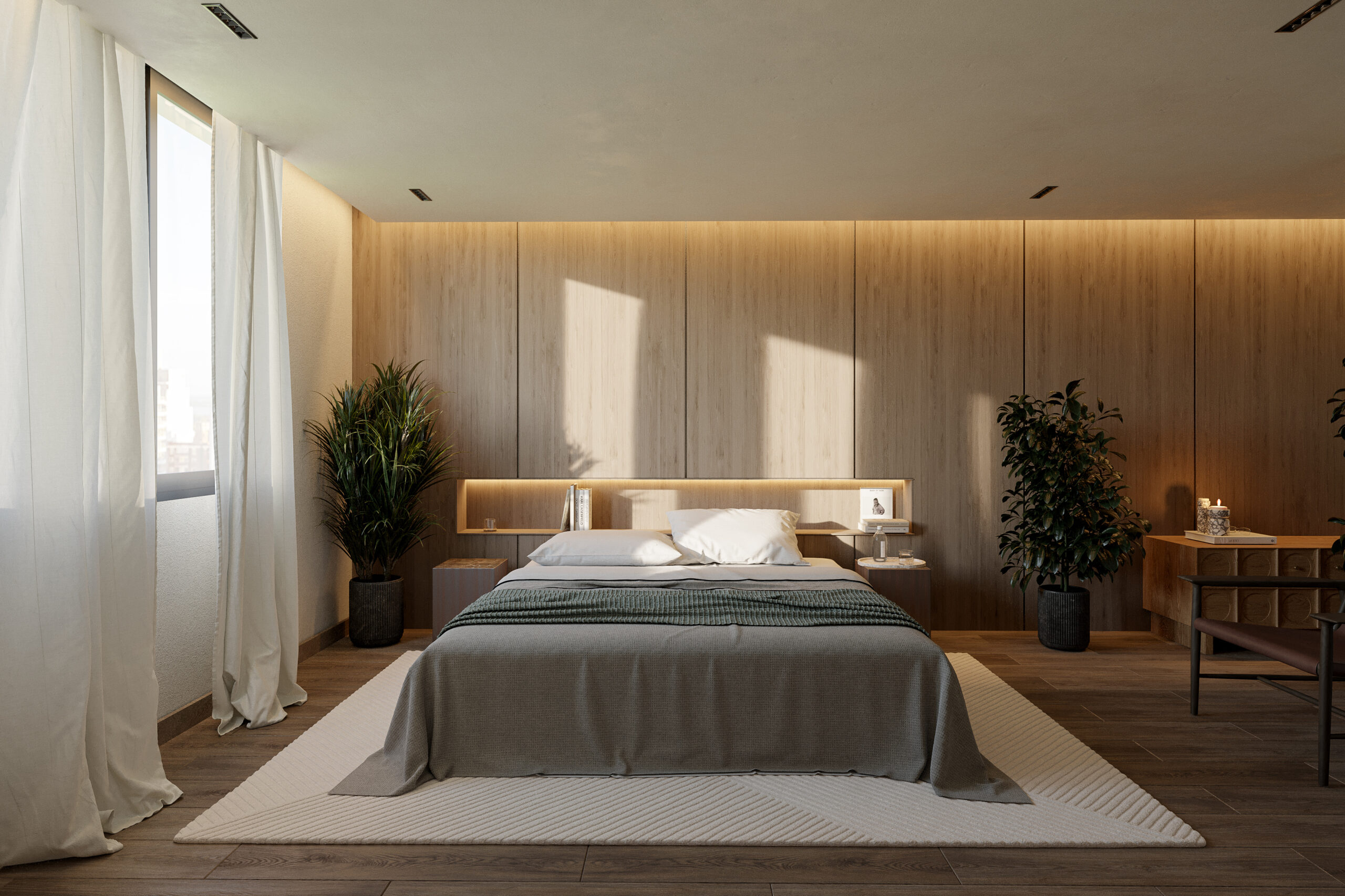
From a visual standpoint, special attention was given to the relationship between natural light, landscape, and interior space. Interiors were conceived as warm environments, with generous daylight and sunset lighting that reinforces an emotional connection with the surroundings and anticipates the lifestyle proposed by the project. In the upper levels, the visuals highlight river views, emphasizing one of the development’s most valuable features.
The interior design was fully proposed by our studio. We developed furniture layouts, material selections, and surface finishes aimed at achieving a contemporary and coherent aesthetic aligned with the building’s profile. Each decision was evaluated based on its visual impact and its ability to strengthen the project’s commercial appeal.
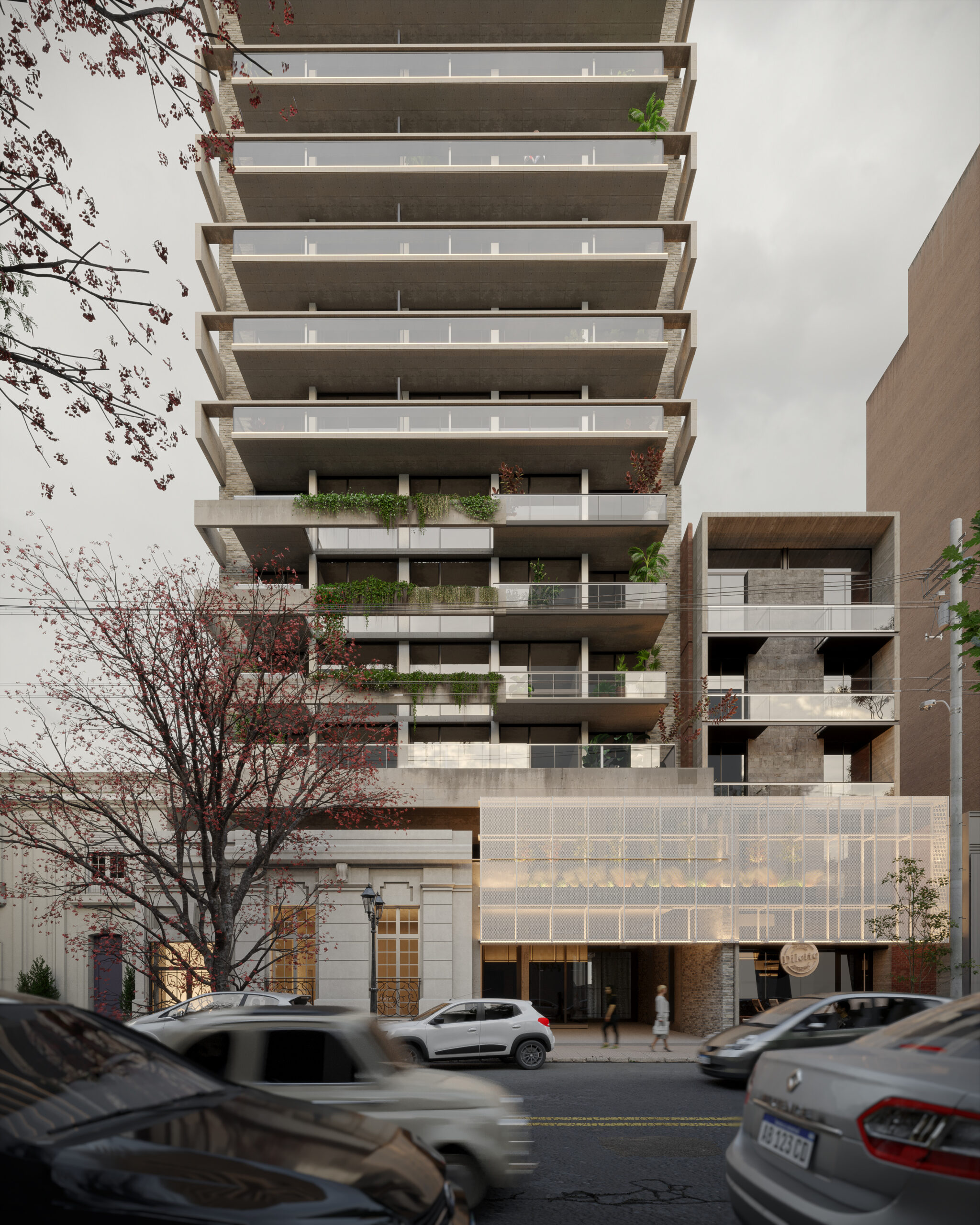
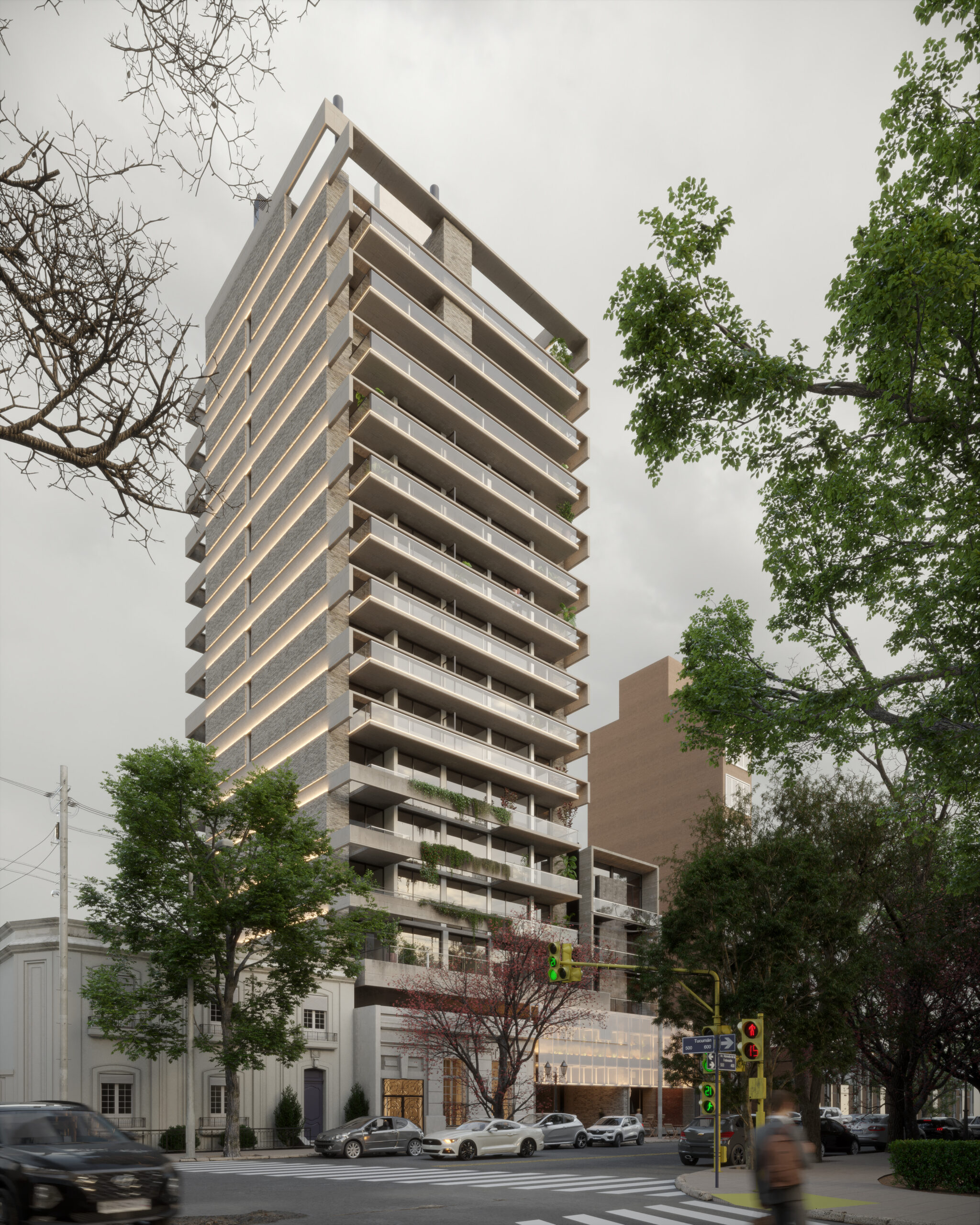
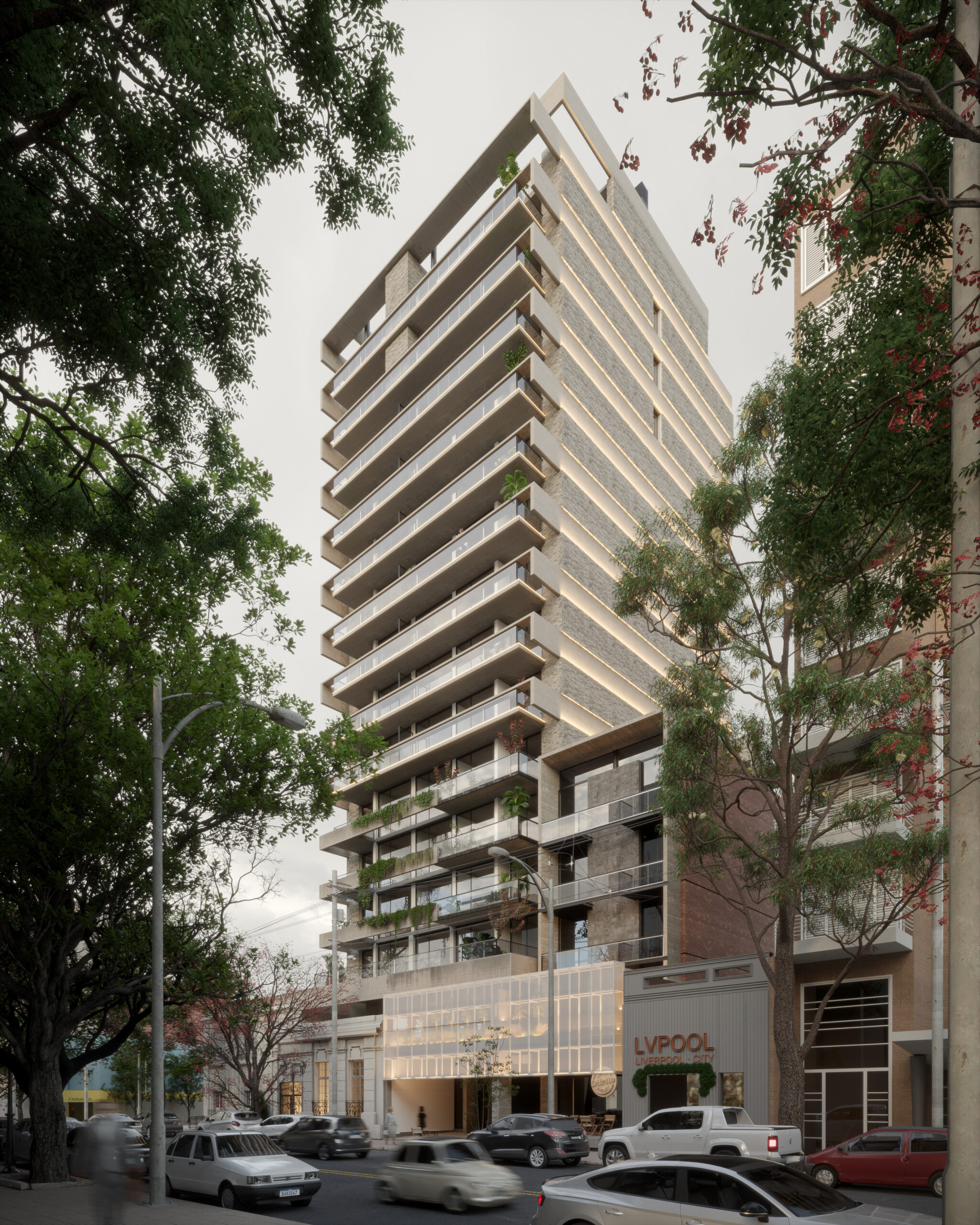
Camera angles and compositions were also defined by our team, with the goal of presenting the spaces clearly, proportionally, and attractively for potential buyers. Exterior scenes were enriched through detailed urban context work, including commercial spaces, street trees, existing signage, vehicular flow, and car typologies typical of the area, reinforcing the realism of the images.
Exterior lighting was carefully tested and refined, resulting in a neutral white light temperature that enhances the project’s main materials, such as concrete and brick, adding clarity, character, and presence to the overall composition.
This project reflects our approach to visualization: understanding context, building a visual narrative, and using imagery as a bridge between design and audience, enhancing communication and increasing the perceived value of the real estate development.